The creative engine: where algorithms meet authors
How Sourcebooks' CEO Dominique Raccah is rewriting the industry playbook with radical agility and human-centric tech.

Published: 19.5.2026 | Photo / Video: Youtube
Dominique Raccah didn’t just build an independent publishing powerhouse from a spare bedroom with a mere $17,000; she fundamentally reengineered how books meet readers. As the visionary CEO of Sourcebooks, Raccah has spent decades using data not as a rigid rulebook, but as a creative compass to spark unexpected bestsellers and shatter industry norms. In this exclusive conversation with Bilandia’s Albrecht Mangler and dpr’s Daniel Lenz for their podcast IGNITE! Publishing, she pulls back the curtain on the power of extreme agility, radical automation, and the unconventional retail channels driving her massive growth. Yet, when asked how she would completely upend the market if she had to start all over today, her answer caught them a bit off guard…
Dieser Inhalt ist durch deine Cookie-Einstellungen blockiert. 🍪
Du kannst dies in den Cookie-Einstellungen ändern oder es für diesen Besuch nur akzeptieren und laden.
Daniel: We want to dive deep into the history of Sourcebooks and your own history. At the age of nine, you moved to the US from France. And in another podcast, you mentioned that you became a reader only when your mother sent you to the library. Is there a special moment you remember when you discovered the power of books?
Dominique: Every kid who becomes a reader encounters a set of books that suddenly captivates and inspires them. It was the same for me. I had just moved schools again because I skipped a couple of grades, and once again, I found myself in a room full of people I didn’t know. For introverts, a room full of strangers can be somewhat terrifying and nerve-wracking. I was looking for a place of safety and comfort, and I found it, of course, in books. I discovered an author I loved and devoured everything they had written. I even noticed there was a sweet spot in their writing during a specific range of years, so I searched for all the books they had written during that period and then started again from the beginning. I was already very mathematical in my approach.
Daniel: And the first book you liked so much, was it a book about numbers, mathematics, or data?
Dominique: Not at all. The mathematics in my life actually comes from a different place. My dad was a physics professor, my husband is a scientist, and my son is a scientist as well. A large part of my family is deeply scientific, so I come by it naturally.
My passion for mathematics developed further when I was a graduate student at the University of Illinois Urbana-Champaign in the math-stats department, specializing in psychometrics—the field of tests and measurement. I was planning to do a PhD, and I was deeply interested in the mathematical modeling of human decisions. How do people make choices, and can we model that mathematically? It turns out that marketing is an excellent application for that specific field. You want to understand how someone chooses between this box of cereal or that one, or this brand of mayonnaise versus another. That is a direct application of that work, which is how I ended up spending seven years at the advertising agency Leo Burnett.
Daniel: Afterwards you became a publishing entrepreneur. And, you brought this passion for mathematics and data. In hindsight, was it a particularly bold move considering the fact that the publishing industry in those days wasn't very data centric?
Dominique: In hindsight, it was not only bold—it was foolish. It was a really bad idea, and I was extraordinarily lucky. There really was no good model or established approach for what I was trying to do because data was very hard to come by at that time. There was no BookScan, no analytics—none of the tools that are standard today existed back then.
However, coming from an outsider background, data became my way into the business. Publishing was heavily headquartered in New York and was very literary—essentially a closed circle of people speaking to one another. There were very few outsiders. Data helped us understand what we could bring to the market. We had no legacy systems and no literary pedigree, but we were evolving.
Another major advantage was that while New York often published for New York, everyone at Sourcebooks was publishing for the Midwest, which represents a much larger readership in terms of sheer numbers. Very early on, we released a book called Finding Time: Breathing Space for Women Who Do Too Much. It became our first major bestseller, selling an extraordinary 85,000 copies at the time. It was blindingly clear who the reader for that book was: it was my neighbors and myself. We were publishing for readers who were being neglected by the establishment.
Treating authors as brands built our midwestern foundation
Albrecht: You were already treating readers and authors as brands back then. That was completely different from the traditional publishing professionals of the time, who were purely focused on shaping art or culture. Looking back, do you think this brand-centric view was your crucial advantage?
Dominique: You are exactly right. We were a place where people could come to have a real conversation, and because we were starting from nothing, we were willing to talk to anyone. We were very open-minded. You had to create a company without legacy systems and without a literary pedigree. As I said, New York often published for New York, whereas we focused on a broader readership. Treating authors as brands and being completely open to the market gave us the foundation to build something entirely new.
Albrecht: At Sourcebooks, over the past decade, you’ve systematically built data teams, invested in technology platforms, and developed internal programs to enhance data literacy among all employees. In your acceptance speech for the Sally Dedecker Award for Lifetime Service you said that data is no longer a quiet infrastructure. "It’s a creative engine, a compass, a powerful storytelling tool in its own right.“ What does this mean in the context of daily business operations?
Dominique: It’s a great question. As someone who has spent a lifetime working with data, I believe this highlights one of the most fundamental misunderstandings people have. They think data provides answers; I think data provides questions. So I don’t think that data will tell you, yes, do this versus that. Data will say instead: it looks like readers are yearning for, thinking about, or would be interested in a specific topic. And then you have a variety of further questions around that. And using data as the sole decision engine almost negates the role of the creative engine, that is publishing. Publishing is a creative force. If we use data to help inform and help us think about what we could be doing better, differently or how we could grow our authors’ businesses, that creates a really different value for the author and the publisher both.
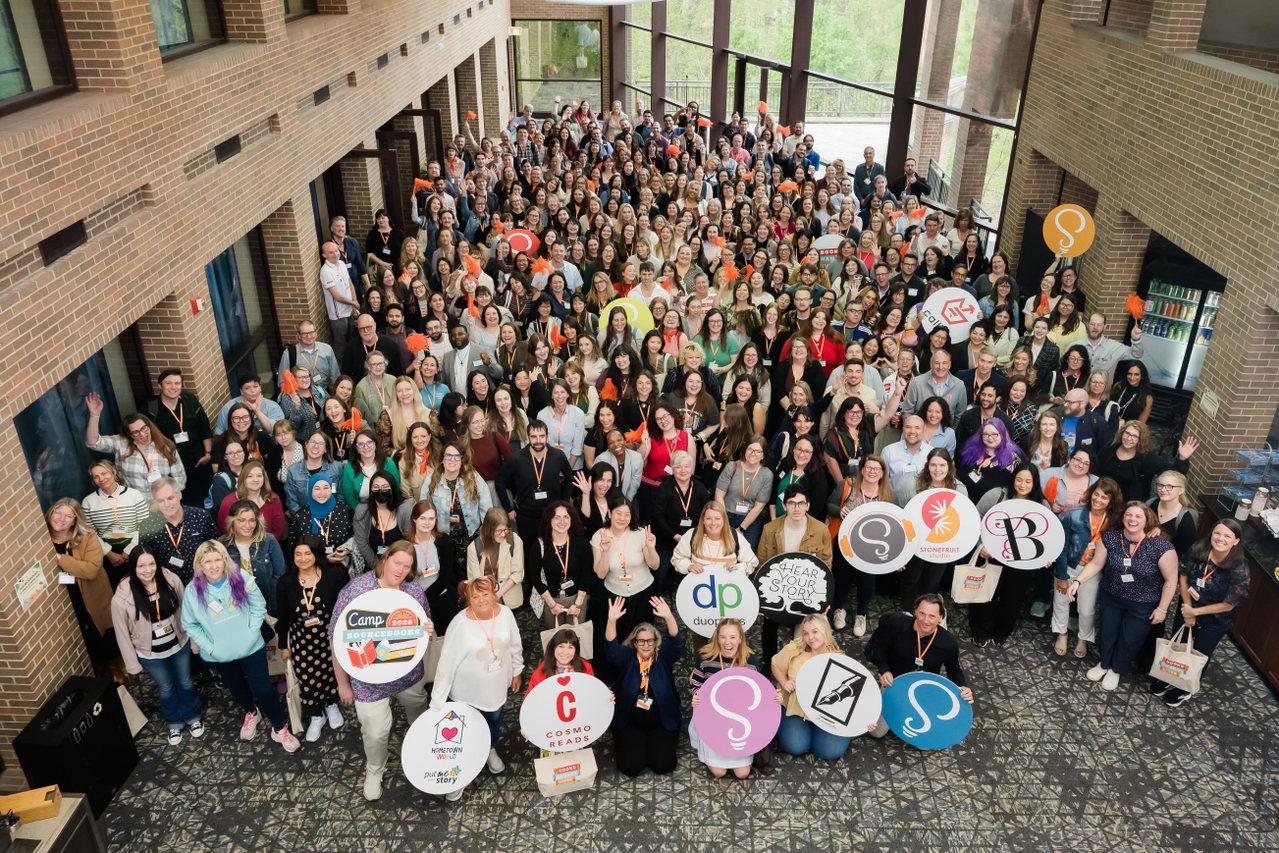
"Camp Sourcebooks" is an in person gathering the publisher holds every 18 months for the whole company.
Data uncovers what readers are actually yearning for
Albrecht: How does the role of editorial change when a publisher works systematically with testing, focus groups, and market observation?
Dominique: We look at data all the time, in every single area. Every single day, we are on the hunt for new sources of data. What changes is profound. We are currently facing a crisis in readership, particularly among young boys. Because of this, we have been systematically analyzing what kind of books we should be providing to them. What can we do to help them become readers? One of the books that we publish with extraordinary joy, I have to tell you, is The Academy. Book six publishes today. It has an extraordinary 8,000 pre-orders. For a middle-grade novel about soccer. T. Z. Layton is a genius. He noticed that his son was not reading. By the way, he is a writer of mysteries and thrillers for the adult market. He decided to apply his skills to writing a book that his kid would love. So he asked himself, okay, what does my son love? Well, my son loves soccer, video games, and pizza. He wrote a book about soccer, video games, and pizza. We have now sold, in the amount of time we’ve published him, almost half a million copies.
This is reader-first in the most personal sense. He was writing literally for his kid. Well, it turns out lots of kids are like his kid. That is a good way of thinking about what we’ve been doing at scale. We’re doing that for readers who love romance. We’re doing that for readers who love mysteries. We’re doing that for readers who love thrillers. We’re doing that in YA over and over again. We’re thinking about, what are these readers actually yearning for? What would make them delighted, what would make them really happy? And you can look at a bunch of data and kind of come up with some ideas. And then we go and find those writers. For example, yesterday I made an offer on a book. We had just come out of our Romance Summit, where we identified three specific trends we wanted to publish into. A new author came to us with a proposal that fit exactly into one of those trends, so we decided to publish it immediately. This kind of publishing is reader-centric and author-centric at the same time.
Albrecht: If you scale based strictly on numbers, the danger I see is producing more of the same all the time, which can cause the market to become saturated and boring.
Dominique: I completely agree. More importantly, you have to pay incredibly close attention to the "delight factor." We spend a lot of time looking at qualitative data—Goodreads ratings, NetGalley, Amazon, and Barnes & Noble reviews—to understand what people are actually saying about the story itself.
Albrecht: Do you have a specific method to discover very unconventional authors who might form new trends, turning data into an inspirational spark?
Dominique: Absolutely. We spend a lot of time analyzing what readers are searching for that hasn't been created yet, and then we actively ask authors to write into those spaces. For example, we have an author whose last two books were successful, but not quite as successful as we wanted. One of our editors, who is incredibly talented, went to them and said: "There is a clear need in the market for this specific concept, and it doesn't exist yet. Would you write it?" The book is coming out soon, and the pre-orders are already off the charts.
Albrecht: Is it easier to talk to your authors about uncomfortable publishing decisions when you can back them up with data?
Dominique: Authors know an awful lot about their own readers. Having a conversation about expanding that readership can always be slightly uncomfortable because you are targeting an audience you know less well. You end up discussing whether there is value in that direction, if it's an evolution of their style, or just a matter of taste. Fortunately, we work with extraordinary editors who navigate these conversations beautifully, often consulting with agents before speaking directly with the author.
True agility requires both smart logistics and an entrepreneurial culture
Daniel: So we have talked about the data centricity as a DNA of Sourcebooks. Looking back, which other strategic decision was the real turning point for Sourcebooks’ later success?
Dominique: I would say there are two pieces, and they’re related. There’s data, and then there’s agility. Agility is actually a separate thing from data. But we’ve always been extraordinarily fast. We had to be, because we needed to take advantage of the moment at the time it was occurring. And publishing, as we’ve all experienced it in the past, has been a slower and slower business. One of the great frustrations that authors have is: why is it that I hand in a manuscript and the book comes out a year and a half later? What are you guys doing in that 18-month period? That seems like a lot of time. And getting books to market earlier, but still supporting them in ways that make the book successful – that has been a lifelong endeavour and started happening very early and has continued to be a thing that we are very focused on. I would say we’re probably best known for data and agility. Those are things that retail partners really get from us.
Daniel: You started as a very small publishing house. Today, as one of the Big Five, how do you preserve this agility?
Dominique: We have put in a lot of systems to really help us be agile in this environment. And so we’re doing things all the time. We just fast-tracked a book, literally announcing it last week for publication this coming June. That’s a window of just two months, which is only possible because we spend an incredible amount of time building the necessary systems.
Beyond logistics, we also invest heavily in our culture. We are a largely remote organization, so bringing the whole company together is a major event. Last week, we hosted "Camp Sourcebooks," which is an in person gathering we hold every 18 months for the whole company.". We have been adding an average of one new role per week for the last two years, yet we maintain the lowest turnover rate in the industry—people tend to stay at Sourcebooks.
Because we had roughly 100 new employees join us since the last camp, I sat down with them in small groups of eight to ten to hear about their experiences, what they love, and what we need to learn from. I took verbatim notes, analyzed them using ChatGPT, and requested a summary. The biggest theme that emerged across every single group was radical transparency. People repeatedly described an entrepreneurial culture where everyone is empowered to take action, manage their business, and solve problems quickly. We operate like entrepreneurs within an ecosystem that has remained stagnant for a very long time.
We align our corporate milestones directly with our authors' goals
Daniel: In 2025 Sourcebooks cracked the Big 5 pushing Macmillan into sixth place – by print units sold, not by revenue... You have said that “We had no goals that look like that.” Which goals did you have instead as an indie?
Dominique: Our goals are very much aligned with our authors. For every one of our top authors, we know exactly what they want to achieve. For instance, T. Z. Layton has a clear goal of reaching young boys around the world to turn them into readers, and now he is working on a volleyball book for girls. We have another author, Jeffrey Mason of I Want to Hear Your Story, for whom we’ve sold eight million books. His goal is to change how generations communicate and help people create their legacy. We look at what the author is trying to accomplish and figure out how we can help them build that.
Beyond that, we operate by SMART goals, which is a system that everybody knows. If you look at our SMART goals for last year, obviously there was a revenue goal and there was a POS goal, but the big goals that we were working on were actually around innovation and automation. We had a number of automation goals, and that was actually a blast, because we went through the whole company. My goal with automation was to get rid of the stuff that people shouldn’t be doing—I call it stupid stuff. The repetitive tasks that really do not add the kind of value that we want human beings doing. Last year, we saved 22,000 hours of manual, repetitive tasks. Let’s have our team working on creative things. Let’s have them working on areas where human beings can really add value, as opposed to putting buttons on web pages, just as an example.
Daniel: Compared to the other Big Five publishers, Sourcebooks seems to face two distinct disadvantages: you entered the audio business quite late, and your backlist is not nearly as large as theirs. What potential do you see as your audio and backlist sectors gain traction?
Dominique: I would argue that those are actually massive advantages. Mathematically speaking, we reached the Big Five without a massive historic backlist or an established audio business. If I were the other guys, that would make me worry. Of course, we are now comprehensively building out our audio presence, heavily supported by our partners at Penguin Random House, who have been amazing.
Special markets allow us to find the casual reader
Albrecht: Another way to achieve success is by utilizing alternative distribution channels beyond the conventional book chains, such as special markets…
Dominique: Special markets is on fire.
Albrecht: This special markets business grew by 18 per cent in 2025 and includes gift shops, lifestyle retailers and hobby shops – places where readers spend time for other reasons. Why are these alternative distribution channels so important today?
Dominique: We’re trying to create a world of readers. If you think about the population of readers, there are heavy readers—those are the people who go to bookstores. There are medium readers—those people go to Target and pick up a book. And then there are the people who read one book a year, maybe one book every two or three years. They are the majority in every category. This is Leo Burnett talking, by the way. In every category, light users are the majority of users. If you can get those people to buy more of whatever – cereal, ketchup, mayonnaise, or books – then you create a powerful effect that drives both momentum and discovery. We care a lot about being in places where you don’t expect to see a book.
Albrecht: On the other hand, you have a special team that’s approaching indie bookstores, which I really appreciate. In the German market, it’s almost impossible to do the footwork and visit all the indie bookstores to showcase your program. Is this strategy aimed at making avid readers more present at the indie bookstores they frequent, or is it a completely different approach?
Dominique: Actually, we were late in creating an indie sales force. But we created one starting about 18 months ago, and it has been life-changing for us. We just did our meeting with the American Booksellers Association yesterday. And they told us that in every category they had – and I’m reading from my notes with them: reducing damages, commitment to diversity, banned books, accuracy in shipping, on-sale dates – we were at the top of the list for booksellers. We were absolutely either number one or number two in every single category they had.
So we have strived to create a really good channel and development with our indie partners. And the reason for that, partly, is they’re growing in a wonderful way. There were 3,352 independent bookstores as part of the ABA, and across 3,782 locations they had a 17 percent increase in membership last year. 584 new stores opened last year. So it’s a thriving business that is really growing and is so well-suited for an indie like ourselves. We’re an outsider, so it makes sense for us to be aligned with that particular channel. And we’re very excited about it.
Albrecht: Are you also thinking about merch – book boxes with T-shirts, socks, cups?
Dominique: We need to think about that, and I think that’s going to be a value. At this year’s BookCon we were flooded with traffic—25,000 people showing up to talk to authors. Can you imagine? It was so exciting, it was so enlivening. And yes, there was merch, the book boxes, the T-shirts, the hats, all of that. This is so important, because it’s a way of helping the readers to get closer to the author they love. I thought it was so powerful.
Daniel: It seems to be a specific issue in the US that you haven't historically prioritized these massive consumer-facing events. In Germany, events like the Leipzig Book Fair draw over 300,000 public visitors…
Dominique: I think it is a major structural failure in the US market, and I discussed this with the ABA just yesterday. Our readers want experiential, human connections that foster a sense of community. There are a few specialized pockets like YALLFest or literary gatherings like the LA Times Festival of Books, but we badly need to establish larger, highly experiential events like the Buenos Aires Book Fair to truly bridge that gap.
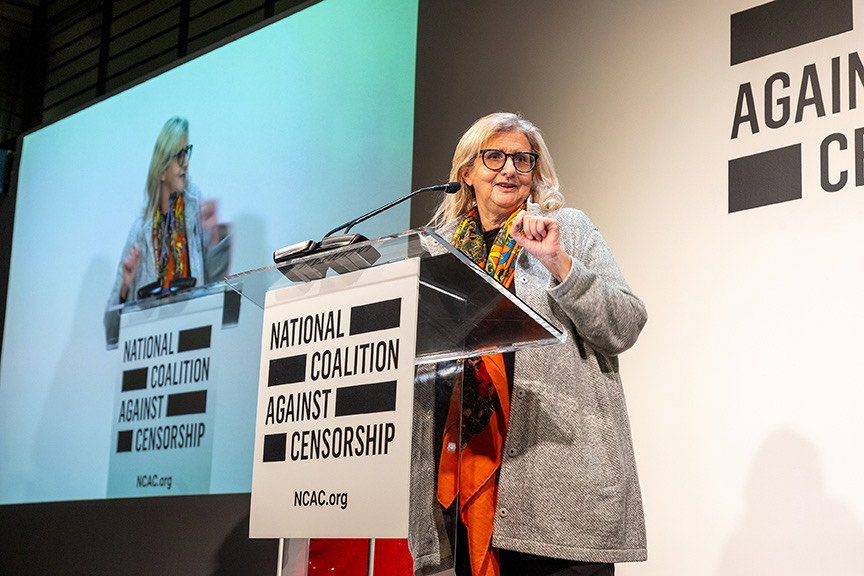
Publishers must protect creators from artificial intelligence
Daniel: Let's pivot to the topic of Artificial Intelligence. You mentioned using automation within your publishing processes, but how else are you implementing AI right now?
Dominique: We are exploring a lot of AI applications, but I think it is extraordinarily important to start by asserting that we must protect authors and content creators—including illustrators and translators—in a consistent fashion. Their creative work must be rigorously protected from being harvested at will by AI companies. I have zero interest in replacing human beings with AI, and I find the casual way some technologists discuss replacing creators absolutely abhorrent.
That being said, we have identified seven distinct operational areas where we will use AI consistently to improve our workflows and free up our team. It comes back to eliminating administrative tasks so our employees can focus on creative work where humans truly add value.
Daniel: This is a highly debated topic, and there is a clear divide in the European publishing business regarding AI adoption. Do you see a similar rift forming in the US market?
Dominique: The divide absolutely exists, and it requires a nuanced conversation. I highly recommend Colson Whitehead's recent article in the New York Times, which perfectly mirrors my perspective: use technology to enhance workflows, but do not use AI to replace human creativity—as he put it, read the book, not the summary.
Using AI to summarize large datasets or port complex files from one system to another is highly appropriate. For example, a friend of mine who owns a large bookstore in the US wanted to organize thousands of historic author interview files from his podcast to make them accessible on his website. He simply didn't have the manpower to do it manually, so he used AI to organize the archive. That is an excellent use of the technology. If the publishing industry simply says "no" across the board and refuses to understand these tools, we will lose our seat at the table.
Learnings from the Shy Girl case
Daniel: Have you licensed your content to AI companies?
Dominique: We haven’t, largely because our authors hold very mixed views on the matter. Right now, our immediate priority is copyright enforcement. Every week, we catch bad actors using AI to scrape our authors' intellectual property—producing unauthorized book summaries, mimicking protected characters, or flooding Amazon with AI-generated copycat books featuring dangerously similar covers just hours after a major release. We are facing a deluge of low-quality content.
Our response must be to remain deeply connected to our authors, maintain radical transparency with our readers, and edit what we publish with extreme care. Readers will ultimately demand to know whether a product is cheap AI slop or a genuine book written and refined by human hands.
Interestingly, I ran an experiment with ChatGPT when it first launched two years ago. I asked it to write an alternative ending to one of our multi-million-selling books in the exact voice of that author, and it did so easily. Three months ago, I ran the exact same experiment. This time, the system blocked the request, flagged a copyright notice, and laid out a comprehensive fair-use argument. This proves that AI companies can learn—and they learned to respect copyright because they faced major lawsuits.
Daniel: Here in Germany, Penguin Random House just sued OpenAI for exactly that reason—the unauthorized scraping of copyrighted content.
Dominique: Exactly. And that is indeed why these AI companies are starting to learn: because they got sued. That is my hypothesis. This is going to be an evolving topic, and we will all get to think about it quite a lot over the next many years.
Daniel: There was this Shy Girl case at Hachette. Could it have happened at your organisation that an AI-generated book was published?
Dominique: This is going to lead to a very intense conversation around what is and is not a human-centered, copyrightable work. One of the things that I think is deeply concerning is that we are living in a time when the actual government of the United States is perhaps less prone to the protection of artists than has been true in other times. We are going to have to think about all of these pieces as they unfold.
For example, just recently, one of my favorite authors released a new book. Within a matter of hours, a nearly identical work appeared on Amazon, featuring a highly similar cover. It was live, available for purchase, and very clearly not created by her. This author had spent two years working on that book. This is exactly what we are up against, and it is going to be a deluge of very bad content. To answer your question, Daniel, I think we will have to lean heavily on two things: being deeply connected to our authors, and reading what we publish with extreme care. There is simply no avoiding that.
The future belongs to radical and entrepreneurial thinking
Albrecht: What I find fascinating in our conversation is that you still talk about your publishing house as independent, even though you mathematically belong to the Big Five now. You are still an indie at heart?
Dominique: Yes, and we like it! Though I think the way I am going to start describing us is "entrepreneurial." Because I think that really is the true differentiator between us and the others, including our partners at Penguin Random House. We are deeply entrepreneurial, and that is incredibly useful in times like these.
Albrecht: You’ve made so many groundbreaking innovations in the industry. If you were a young newcomer with $17,000, where would you begin today? What new approaches intrigue you?
Dominique: I would be very fixated on this kid's reading opportunity. We have a challenge in helping children to read, and then we also have an opportunity to help create a world of readers. So I think if I were doing it all over again now with $17,000, I’d be deeply invested in understanding what children and middle-grade readers actually want to read, and how we can get those books into more hands. And I would probably approach it very radically.
Albrecht: Thank you, Dominique, for taking your time for this podcast. It’s been an inspiring interview. Thank you.
Dominique: Thanks for having me.
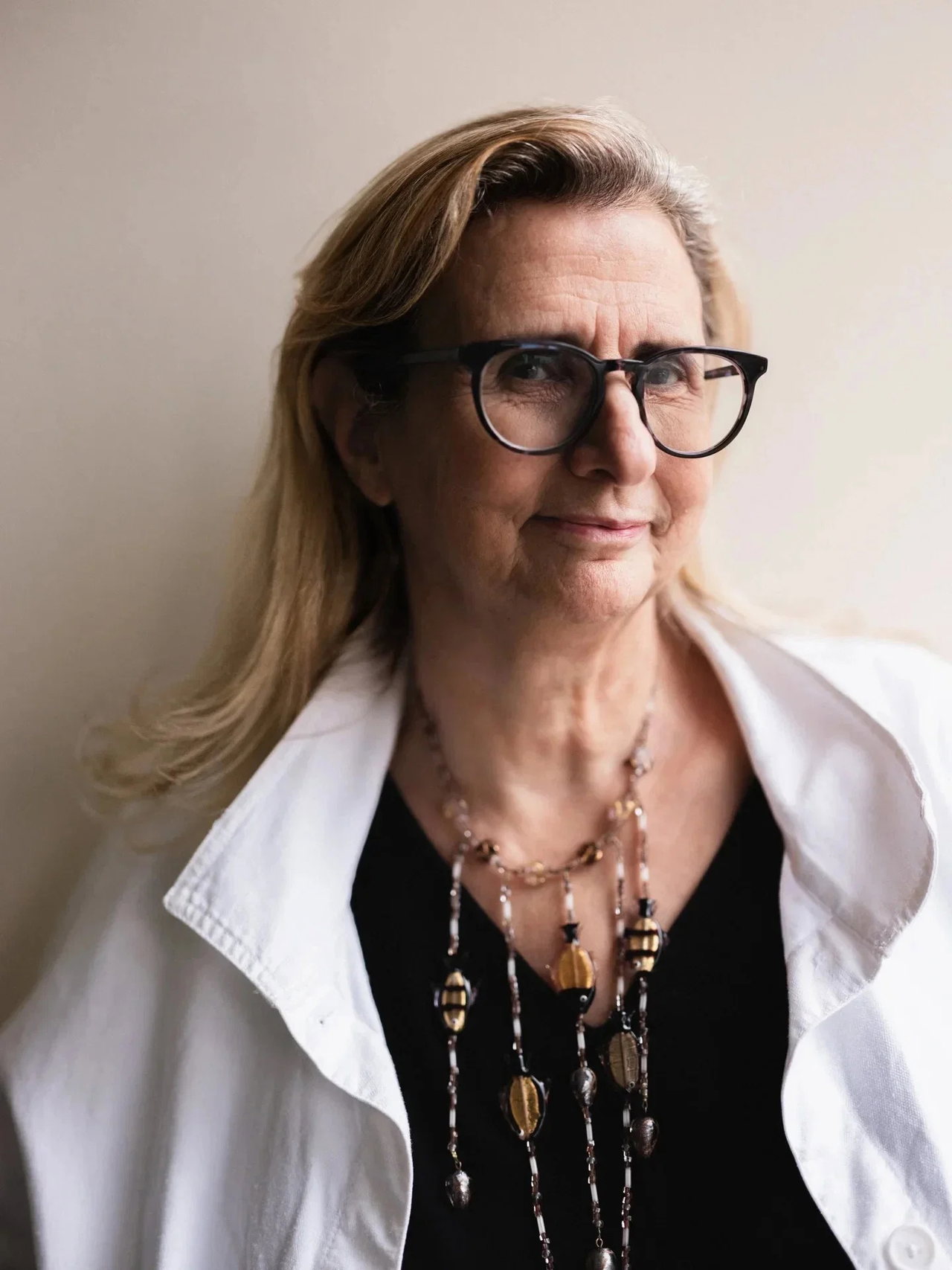
Dominique Raccah (LinkedIn profile page) is the founder and CEO of Sourcebooks, today the most successful independent book publisher in the United States. Born in France, she moved to the US at the age of nine, where she taught herself English with library books – an experience that shaped her lifelong mission, “Books Change Lives.” Before entering the book industry, the statistician by training spent eight years at the advertising agency Leo Burnett, where she built departments dedicated to large-scale data analysis long before it was common practice. In 1987, with $17,000 in startup capital drawn from her retirement savings, she struck out on her own and founded Sourcebooks in a spare bedroom in Illinois.
Under Raccah’s leadership, the company has grown into one of the industry’s innovation leaders, driven by a consistently data- and reader-centric approach. She has built a corporate culture rooted in continuous experimentation, producing multimedia bestsellers as well as specialised imprints in children’s books, YA thrillers and romance. Another milestone came in May 2019, when Penguin Random House came on board and the Bertelsmann publishing group acquired a 45 percent stake in the house.
For her visionary work – which includes the strategic build-out of the company’s data capabilities and, later, the partnership with Penguin Random House since 2019 – she was named Publishers Weekly’s “Person of the Year” in 2016. Alongside her commercial success, she has more recently become an outspoken advocate for the freedom to read and against book bans in the United States.